Done Beats Perfect: Why Side Projects Are Worth Shipping


I believe working on several side projects simultaneously offers many advantages. The biggest benefit is simply that it's enjoyable. You learn something new, something you've never done before. The challenge lies in finishing a project and "shipping" it. You don't do this to earn money, not to show off, but purely to prove to yourself: "I wanted to make this, and here it is, it's done." That gives tremendous satisfaction.
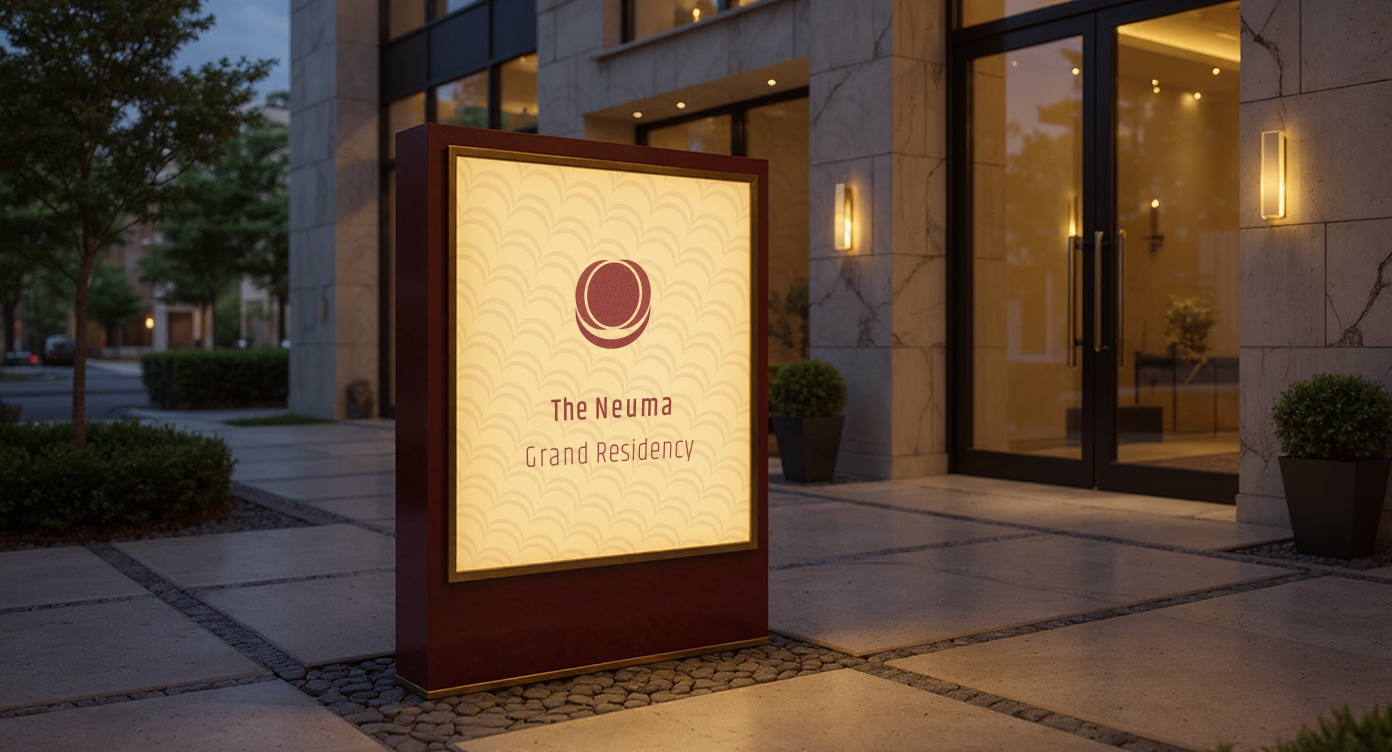
I felt this when I recently published the Neuma Brand Identity case study online. Even though the project might not be perfect and there is plenty to criticise, it now feels "finished" and that gives me a good feeling. A side effect is that I now also feel ready to create another brand identity for a different fictional or real company, should the opportunity arise. The knowledge I acquired can be reused in the future. If I had never done the Neuma case study,
I wouldn't have known where I stand, and I would have doubted whether I could actually execute such a project from start to finish. It's not a professional, paid assignment, of course, but the approach and way of thinking is exactly what I would use for professional commissions.
Working through an unpaid side project is therefore fun and educational, and it removes doubt about your own capabilities — provided you finish the project and "ship" it.
The Flywheel Effect
Another major advantage of these self-initiated projects, in my view, is that they act as a flywheel: one completed side project stimulates you to start the next and keep going.
Start Small, Not Grand
Too often — at least, that's how I experience it — I think very "grandly" about everything I want to do and build. The problem is that my thoughts sometimes exceed my skills, especially at the beginning, and I run into stumbling blocks. For instance, I once wanted to code my own static blog website. I had never done that before; my knowledge of HTML and CSS was fine, but the moment I wanted to insert blog content dynamically, it became complicated, because that I had never done.
One possible solution would have been to lower the bar at the start and build just a static website that works well on different screen sizes, with content that doesn't change. If I had done that, at least I would have had something, and from there I could have built further.
I think the key to successfully working on something lies in your capacity to keep going from something small until, hopefully, something "big" emerges as a result of those efforts — as opposed to diving headfirst into something far too ambitious at the outset. Nothing can grow from nothing, but something small can grow into something big.
Shipping Over Perfection
In a world where specialisation is seen as the holy grail, I believe you as a generalist can indeed specialise, but in multiple fields — as long as you don't think too grandly at the beginning, and as long as you get your projects out of your head and "ship" them into the physical world. This requires perseverance, the will to learn, and letting go of perfectionism. In this phase of working on side projects, shipping is more important than "perfect".
Lateral Thinking and Cross-Pollination
Another advantage of working on multiple unpaid side projects across several fields: it increases your ability to think laterally and connect things that don't seem to have much to do with each other at first glance. This can lead to something new. That is the theory behind keeping a Zettelkasten, but you can apply this same thinking to other activities.
For example, what happens when you combine a side project where you write (say, an essay on the decline of nature in your own neighbourhood) with a side project where you take photographs? Suddenly you're a journalist who both writes and photographs. Or what happens when you combine your skill as a brand identity designer with making posters? Suddenly you're a more complete graphic designer.
And there are many more examples where mixing and matching skills through lateral thinking can make you a specialist, or at least yield valuable skills you would never have gained if you had focused on just one field. Working on many different side projects makes you something the market doesn't have a name for yet. And I believe that is precisely what is valuable.
Side Projects I Want to Work On
That is also the reason I have a broad interest in different subjects and fields. Here below are the side projects I want to work on, not for money or fame but simply because I find them wonderful.
- Editorial and Commercial photography
- Making analog darkroom prints of my negatives and dry mounting them for display
- Pen drawing (via drawabox.com)
- Poetry
- Brand identity design
- Poster design
- Blogging
- Creating AI short films
- Reading
- Working on my Zettelkasten
- Self-publishing a book
Thanks for reading! If there's anything you'd want to know, share or discus, feel free to contact me or leave a comment on this article below (scroll down)👇 👇.
You should also read:
The Neuma Grand Residency Brand Identity Design
The Neuma Grand Residency is a proactive brand concept I recently created to explore the boundaries of modern hospitality. Utilizing real-world market data and 5-star industry standards, this project serves as a case study in premium differentiation. I love this stuff. In this case study…
Continue reading...
Comments