'Non ci pensare mai' - An AI Short Film idea

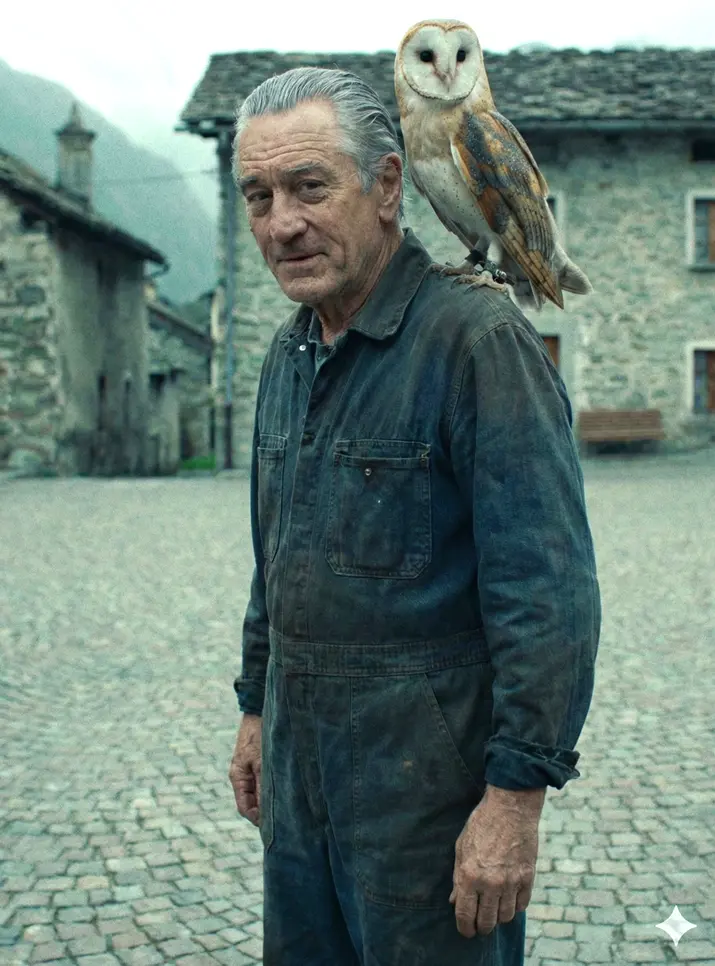
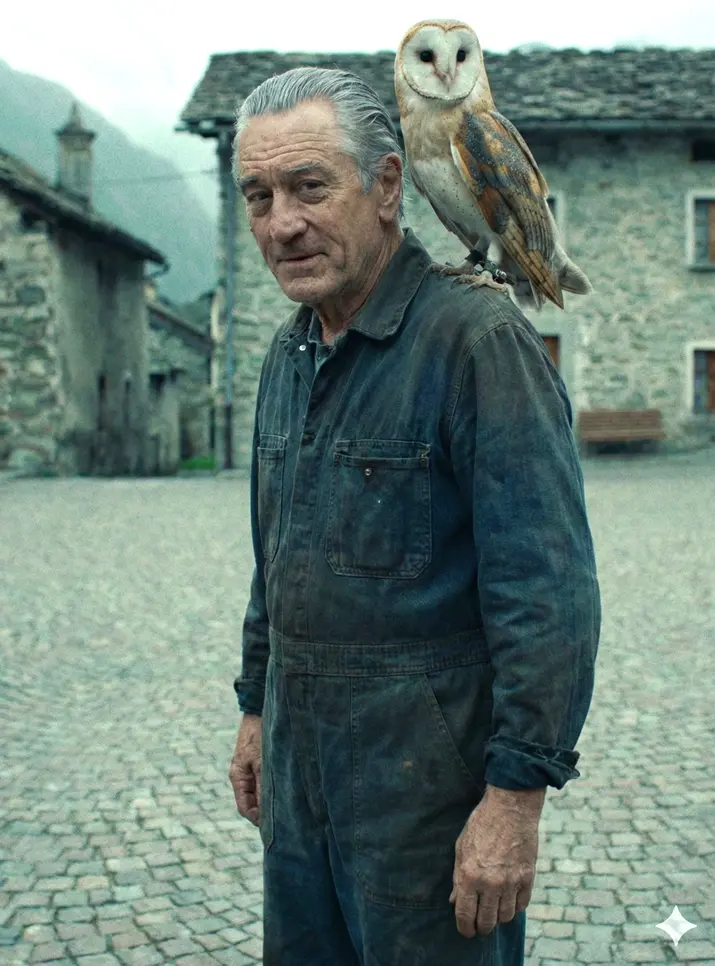
Non ci pensare mai, loosely translated from Italian as 'never think that' is a short film that I came up with some time ago. I was going to create this film using AI, however, I found that it is quite a challenge to direct AI characters to do exactly what you want them to do, and that's an understatement 😆. I have therefore postponed the production of this film until there's an AI tool that allows me to properly direct characters and have them do exactly as I want, without wasting lots of time and credits, only to get mediocre results.
To still give you an idea of the movie, I did write the story line.
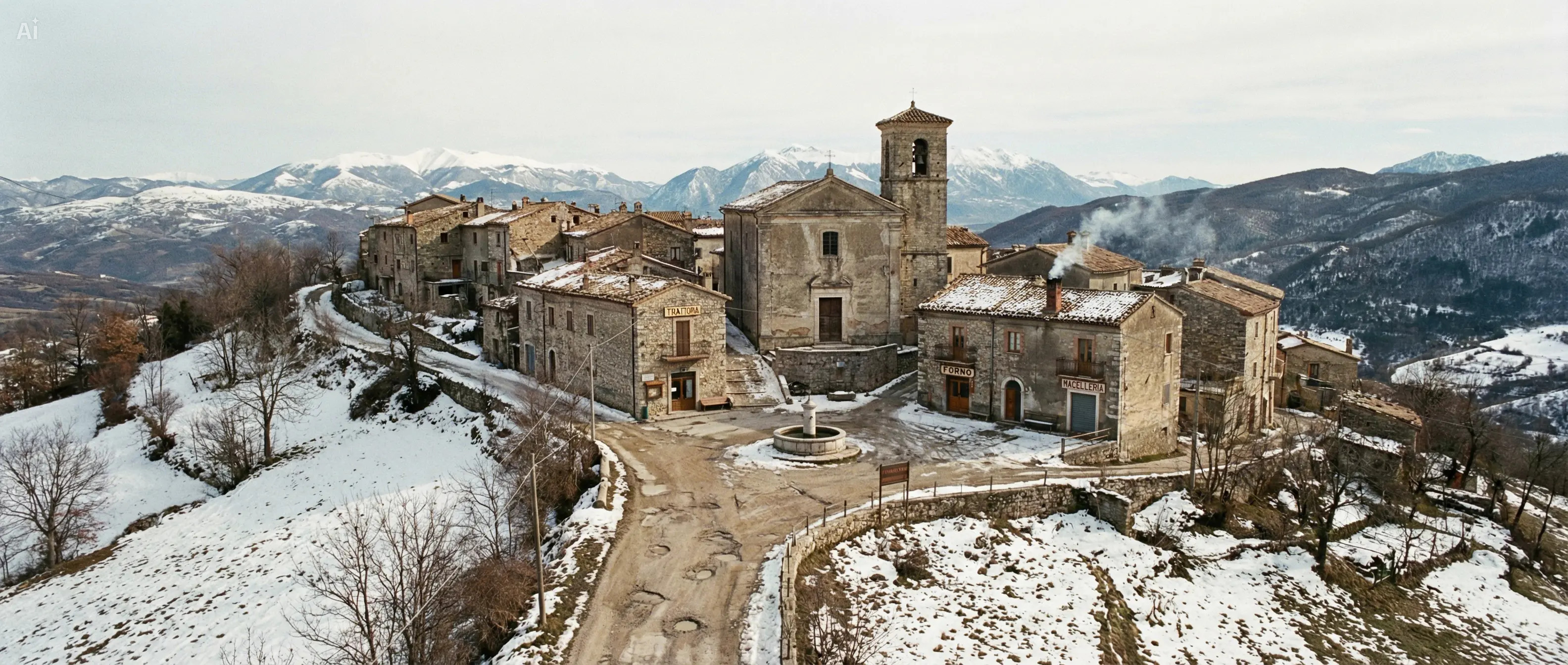
The story unfolds in 1970, in a small, ancient mountain village in Abruzzo, Italy, dating back to medieval times. Characterised by its typical Abruzzo architecture, the village features cobblestone streets and houses, and is home to only a few hundred people. Nestled in a mountainous area, the village is isolated, with the nearest town approximately 20 kilometres away. It is surrounded by mountains, forests, and pasture lands. Access is via a steep, winding local road that often becomes impassable during winter snowfalls.
Life here is quiet and revolves around daily work. The community sustains itself with essential businesses: farmers, a carpenter, a baker, a butcher, a greengrocer, a housewares shop, a car repair shop, and a funeral undertaker. Several small trattorias serve the locals, one of which is noted for its traditional wood-fired pizza oven. The social and religious life of the village centres on the Town Square, which contains a simple Catholic church and a Catholic primary school.
The main character is Gianluca, a 87-year-old mechanic. He previously co-ran the town’s car repair shop with his cousin, who is about ten years his senior and is now retired. Although officially retired due to his age, Gianluca found the workload unsustainable running the shop alone. He continues to work two days a week, typically Wednesdays and Fridays, driven by his love for the work and a dislike for idleness.
The shop is small, accommodating only three to four cars. Years ago, his cousin installed a small, black rubber conveyor belt to efficiently move parts around the space, which was particularly useful when Gianluca worked in the back and his cousin managed the front. Above this belt hangs a picture of Gianluca's deceased wife.
Gianluca has silver, combed-back hair and wears period-accurate work wear. He is generally positive, optimistic, and enjoys helping people, knowing almost everyone in the community. However, the recent loss of his wife has left him consumed by grief, and he frequently wishes he could revisit their shared past.
On a typical Friday in his repair shop, Gianluca gets his wish. While he is working on a car, the black conveyor belt—above which the picture of his wife hangs—suddenly begins running in reverse, something it hasn't done in ages. Everything else in his view quickly follows suit. Initially frightened, Gianluca’s curiosity soon prevails. Unable to stop the belt, he decides to sit on it. The belt automatically extends out of the shop as he moves backward.
He travels on the seemingly endless belt, passing out of the repair shop and onto the village streets. Everyone and everything he passes is also moving in reverse, though they do not appear to notice him. He sees a coffin moving out of a hearth and an owl landing on it. Fruit sellers are seen with oranges and pomegranates floating in the air. A mother with a baby in a pram moves backward.
As the backward journey continues, day turns to evening and then night. Snow begins to fall, blanketing the village. Gianluca is now travelling through the mountains and the forest. It becomes a dark, scary, and cold place. We see him shivering, covered in snow. He passes a pit full of moving snakes and dead owl chicks. He desperately wants this ordeal to end.
After traversing the village and mountains in reverse, the belt stops as abruptly as it started, throwing a disoriented Gianluca into the snow. As he lies on the ground, three owls land beside him, carrying dead snakes in their beaks. In complete darkness, he regains the ability to walk normally, in a forward direction. Feeling utterly lost and wanting to escape, he starts running, though at the slow pace of a 87-year-old. Confusion mounts as he questions how to return, where his familiar world has gone, and why the darkness is so complete. He runs through the forest and over snowy mountain roads, followed by the three large owls, who fly alongside him, seemingly guiding him. One even lands on his shoulder.
Suddenly, a faint, flickering light appears in the distance. He stops running, recognising something. As he walks toward it through the snow, he recognises his own house. The door is open, and a warm, beautiful light spills out. The only peculiar sight is that the house is filled with wooden "children's" toys and objects he remembers from decades ago, suggesting the house is as it was when they were young. He wonders if he has travelled back in time. Everything seems to become warm instantly, and the snow on his face and hair melts quickly.
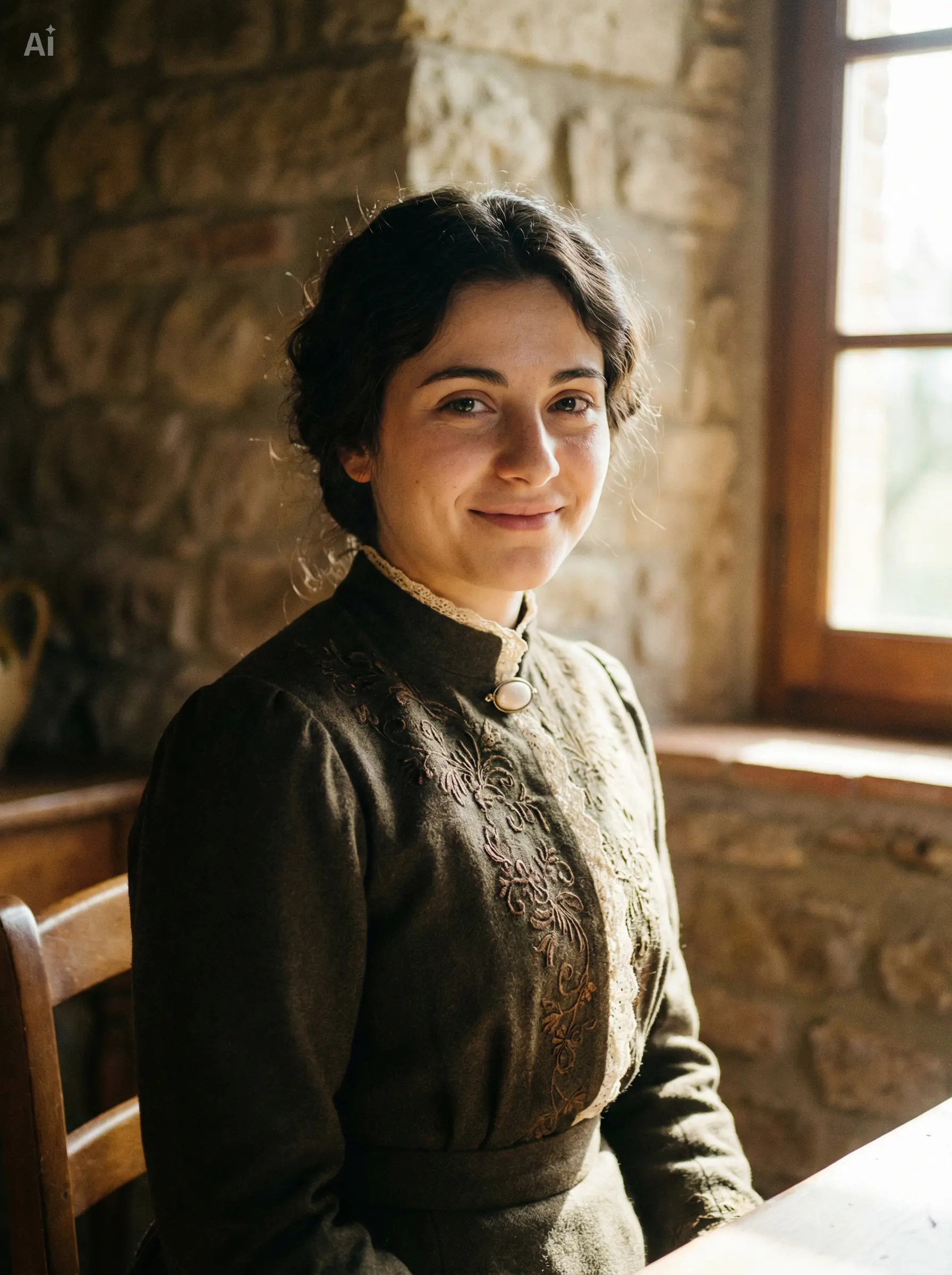
Turning around, he sees his deceased wife standing in the doorway, waiting, just as she always did. There is snow everywhere, but none where she is standing. In fact, daffodils (Narcissus) surround her. She appears younger, as she did when they were a young couple. Holding a candle, she says nothing, but her intense gaze conveys a silent question: "You never thought I had forgotten you, did you?".
The final shot shows Gianluca sleeping in his bed. Was it all a dream, or wasn't it? As the camera very slowly pans out, we hear a feminine voice singing acapella, almost whispering in Italian: “E dormirai che il giorno ti finisca, dormirai, che la notte ti invita, dormirai, e non pensare mai, che la storia sia finita”. In English this translates as: "And you will sleep until the day ends, you will sleep, as the night invites you, you will sleep, and never think that the story is over." As the singing ends, we see an extended arm holding a candle in a candle holder. Then the screen turns black.
How did I come up with the idea for this film?
Honestly, I don't know. For better or for worse, I just sat down to think about an AI-movie that I wanted to make and this is the idea I came up with. In the end I think this movie is about the concept of time and how it passes so quickly. There's a melancholic element to this story, something about longing for a place or a person, remembering them and meeting again.
The film's central symbolism revolves around the dual nature of time and existence. The perpetually moving conveyor belt serves as the primary motif, representing the relentless and dreamlike passage of time.
This cyclical flow incorporates both tragedy and hope:
- Setbacks and Mortality: The imagery of snakes consuming owl chicks illustrates life's inevitable, temporary setbacks, such as grief or death.
- Rebirth and Renewal: Conversely, themes of rebirth and new beginnings are embodied by the pomegranates, the owls themselves, guiding Gianluca’s way through the forest, the coffin emerging from the hearse rather than entering it, the candle held by Gianluca's wife as she stands in the doorway and over his bed and his wife, standing in a beautiful field of daffodils.
These elements collectively suggest that ultimate good emerges from grief and that love is the strongest force of all. The core message of the movie is that there's no time without love and no love without time.
When I ran this idea through Proton's Lumo AI assistant, this is what it had to say:
Based on what I can see in your file, this reads as a short film treatment — a detailed creative document outlining the story, characters, locations, and symbolic framework for a film. Here's what I observe:
Genre-wise, it's a blend of magical realism and allegorical drama, with strong echoes of:
- Surrealist/folkloric cinema — the reversed conveyor belt, the dreamlike backward journey through the village, owls acting as spirit guides, snakes and dead chicks in a pit — these are deeply symbolic, almost mythological elements layered onto a grounded, realist setting (1970s rural Abruzzo).
- Grief allegory — at its core, this is a story about an elderly widower processing loss. The entire reversed-time journey functions as a metaphor for mourning: the descent through darkness and cold, the confrontation with death imagery (snakes, dead owl chicks, a coffin), and ultimately the return to warmth and love.
- Italian neorealist tradition filtered through fantasy — the meticulously described Abruzzo village, the working-class protagonist (a mechanic), the emphasis on authentic period detail and local texture, all recall neorealism. But the magical elements push it closer to filmmakers like Federico Fellini or even the poetic realism of someone like Andrei Tarkovsky (Nostalghia comes to mind with its candle-bearing figure).
Let's wait for a good AI tool now, to actually produce this ;-).